
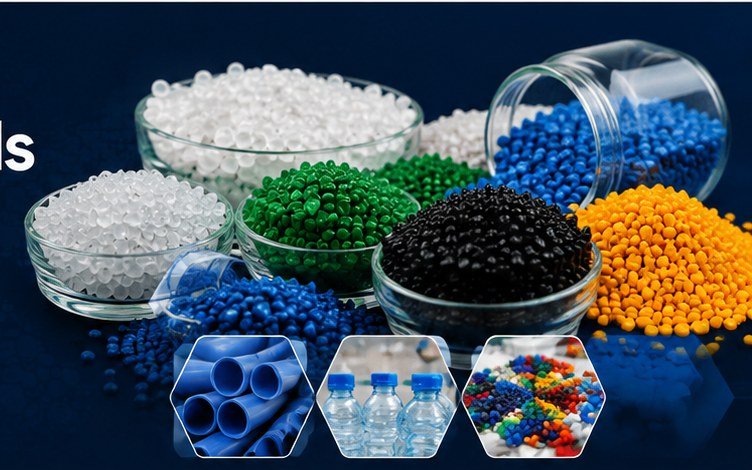
Introduction to Low-Density Polyethylene Resins
In the flexible film and packaging industries, LDPE (Low-Density Polyethylene, Resin Code #4) and LLDPE (Linear Low-Density Polyethylene) are two primary raw materials. Both polymers share similar densities (0.915 – 0.930 g/cm³) and identical basic monomer compositions (Ethylene), yet they exhibit distinct mechanical and rheological behaviors.
These performance variations stem from their underlying polymer synthesis methods and molecular architectures.
1. Molecular Architecture: Long-Chain vs. Short-Chain Branching
The performance differences between LDPE and LLDPE are driven by their branching structures:
| Feature | LDPE (Free-Radical Autoclave/Tubular) | LLDPE (Catalytic Solution/Gas Phase) |
|---|---|---|
| Branching Structure | Extensive Long-Chain Branching (LCB) with secondary short branches. | Linear polymer backbone with uniform, short-chain branches (SCB) from alpha-olefins (1-butene, 1-hexene, 1-octene). |
| Melt Strength | High melt strength due to chain entanglements; easy bubble stability in blown film. | Lower melt strength; requires specialized extruder screw designs and dual-lip air rings. |
| Dart Drop Impact Strength | Moderate impact resistance. | High dart drop puncture resistance. |
| Tensile & Tear Strength | Lower tensile strength; balanced tear resistance in machine/transverse directions. | High tensile strength and elongation; high resistance to tear propagation. |
| Optical Clarity & Gloss | High clarity, low haze, and smooth gloss finish. | Slightly higher haze due to crystalline structures (often blended with LDPE). |
2. Mechanical and Processing Comparison
Dart Impact and Puncture Resistance
The linear backbone of LLDPE distributes mechanical stress across its crystalline structure more efficiently than the branched network of LDPE. As a result, LLDPE films can withstand heavy impacts from sharp, irregular objects without puncturing, enabling down-gauging (thickness reduction) in packaging design.
Melt Rheology and Extrusion Characteristics
LDPE exhibits shear-thinning behavior under extrusion pressures due to its long-chain branches, leading to lower extruder motor loads and stable bubble inflation. LLDPE displays narrower shear thinning and higher viscosity at high shear rates, requiring modified tooling, widened die gaps, and specialized screw profiles.
3. Industrial Blending: The Co-Extrusion Synergy
Rather than using pure resin grades exclusively, modern packaging converters typically blend both resins or co-extrude them in multi-layer structures (3-layer, 5-layer, or 9-layer blown film lines):
- Outer Layers (LLDPE): Provide puncture resistance, seal integrity, and tensile load bearing.
- Core Layer (LDPE/LLDPE Blend): Provides optical transparency, gloss, and melt stability during extrusion.
4. Primary Commercial Uses
- LDPE Focus: Squeeze bottles, food bread bags, shrink wraps, laboratory wash bottles, dry cleaning bags, and coating laminations.
- LLDPE Focus: Heavy-duty pallet stretch films, agricultural silage films, heavy mulch films, geomembrane liners, pond liners, and puncture-resistant trash bags.
How to use this guide
This page is designed to explain the relevant material, process, decision point or failure mode in practical terms. It is meant to support understanding, not replace a current supplier datasheet, process validation, regulatory requirement or engineering sign-off.
Typical material behavior, common process logic, defect patterns, material comparisons and practical decision framing.
Exact product specifications, grade-specific values, regulatory opinions, food-contact validation or factory-specific trials.
Before a production or commercial decision is made, check the exact grade, processing window, standards and local rules that apply to your application.